





The Po Leung Kuk Positive Education Movement in Primary Schools (2024-27) aims to promote Positive Education in schools with a whole-school approach, helping students, parents and school staff to learn, live, teach and embed the concepts of Positive Education. The project aspires to enhance the well-being and resilience of stakeholders, and live a flourishing life.
Po Leung Kuk Positive Education Journey
Exploring pathways to better mental health
Since 2014, the team of Po Leung Kuk school-based educational psychologists has noticed increasing levels of academic, work, and life stress among students, teachers, and parents. In response to this concern, the team established a dedicated working group to examine potential strategies for improving mental health. The team later participated in professional training and seminars delivered by Geelong Grammar School in Hong Kong and Australia. Site visits to local schools that had begun their Positive Education implementation journey, including the Chinese International School and Baptist Sha Tin Wai Lui Ming Choi Primary School, also contributed to a deeper understanding of the theory and practice of Positive Education.
Meanwhile, during the 2015 academic year, a concerning surge in student suicide cases was observed across Hong Kong, alongside a rising trend in mental health issues among parents. In light of these circumstances, the then Principal Education Secretary of the Po Leung Kuk Education Affairs Department advised the team to take a more active role in addressing the emerging social needs. Following in-depth discussions, the team decided to position the strategic implementation of Positive Education as one of Po Leung Kuk's long-term goals, with a commitment to enhancing the well-being and resilience of students, school staff, and parents.
Subsequently, the team began actively planning training initiatives, initially drawing on internal resources from the School-based Educational Psychology Service to provide tailored training programmes for students, teachers, and parents. Po Leung Kuk's strategic plan aligns seamlessly with Geelong Grammar School's (GGS's) inspiring vision and expertise in implementing Positive Education. Recognizing this shared commitment, the team visited GGS in Australia in November 2016 to gain hands-on insights from GGS's remarkable journey in Positive Education.
In the process of exploring Positive Education, we were honoured to receive the support of Bei Shan Tang Foundation, the leading authority on Positive Education development in Hong Kong, establishing a trusted partnership to co-organise two three-day 'Discovering Positive Education' training courses. The course attracted over a hundred educators from Po Leung Kuk, including educational psychologists, teachers, and other professionals. All participants completed the training with an enhanced understanding of the theoretical foundations and potential benefits of Positive Education for both local schools and family education. Inspired by the experience, many expressed a strong desire to introduce Positive Education in their schools. However, constrained by limited resources, schools had to seek external funding to support implementation.
Participation in Positive Education Initiatives
From 2017 onward, Po Leung Kuk began progressively implementing Positive Education across its affiliated schools through participation in various projects. These projects aimed at enhancing the well-being of all stakeholders in school communities. These initiatives include:
2017-2020: Jockey Club Positive Education 'Ascend and Radiate' (JC-PEAR) Project
2018-2024: Lee Hysan Foundation Po Leung Kuk Positive Education Movement in Kindergartens (2018-2021) and Quality Education Fund 'Flourishing Life Start from Childhood' Project (2021-2024)
2020-2023: Jockey Club Project Well-being
2021-2024: Po Leung Kuk Positive Education Movement in Primary Schools
Jockey Club Positive Education 'Ascend and Radiate' (JC-PEAR) Project (2017-20)
Funded by The Hong Kong Jockey Club Charities Trust and led by The Chinese University of Hong Kong, this project introduced Positive Education to selected schools across Hong Kong. Two Po Leung Kuk affiliated schools, Po Leung Kuk Ma Kam Ming College and Po Leung Kuk Castar Primary School, were invited to participate.
Lee Hysan Foundation Po Leung Kuk Positive Education Movement in Kindergartens (2018-2021) and
Quality Education Fund 'Flourishing Life Start from Childhood' Project (2021-2024)
With support from the Lee Hysan Foundation, this project invited experts from Geelong Grammar School to serve as consultants for the Positive Education Movement in Kindergartens, supporting ten Po Leung Kuk kindergartens in their implementation. With further sponsorship from the Quality Education Fund and Po Leung Kuk Li Shiu Chung Quality Education Fund, the project was extended to cover all Po Leung Kuk affiliated kindergartens, kindergarten-cum-nurseries, and eight non-Po Leung Kuk kindergartens, reaching a total of 57 early childhood education units.
Jockey Club Project Well-being (2020-2023)
Sponsored by The Hong Kong Jockey Club Charities Trust, this project was co-organised by Po Leung Kuk and various education partners. Eight Po Leung Kuk primary and secondary schools took part in the initiative. The project promoted physical, mental and spiritual well-being through campus enhancements, teacher training, and development of multimedia resources.
Po Leung Kuk Positive Education Movement in Primary Schools (2021-2024)
Encouraged by the success of the kindergarten project, Po Leung Kuk was honoured to receive joint support from the Lee Hysan Foundation, Chow Tai Fook Charity Foundation and Shih Wing Ching Foundation to expand the Positive Education Movement to affiliated primary schools. This project was implemented in phases across eight Po Leung Kuk primary schools. Project components included:
.Provision of training and workshops for teachers, non-teaching staff, and parents,
.Implementation of Positive Education curriculum for primary schools,
.Establishment of school support networks, such as school visits and exchange activities.
Since the introduction of Positive Education in 2017, these initiatives have benefitted more than 37,389 individuals, including students, parents, teachers, non-teaching staff, and community members across kindergartens, primary, and secondary schools, supporting a total of 28,264 families.
Project Framework
What is Positive Education?
'Positive Education' refers to the application of evidence-based Positive Psychology theories across all aspects of schools and students' families (Seligman et al., 2009; Norrish et al., 2013). This Project aims to enhance the well-being of all school staff, students, and their families.
Differed from traditional psychology, which primarily focuses on negative psychological issues, Positive Psychology is grounded in the principle of holistic development, which emphasises the cultivation, realisation, and development of personal strengths. Positive Psychology explores how key elements such as optimism and sense of accomplishment can be applied to support individuals in facing adversity and challenges, leading towards a flourishing life (Seligman et al., 2009).
How do we live out a flourishing life?
American Psychologist Martin Seligman proposed the PERMA model as the foundational theory of well-being, identifying five core pillars: Positive Emotions, Engagement, Relationships, Meaning, and Accomplishment (Seligman, 2011).
Expanding upon this model, GGS incorporated an additional pillar, 'Health', broadening the theory and enriching the scope of Positive Psychology by extending it into six key domains. Under GGS's Positive Education framework, Character Strengths positioned in the inner blue circle represent the positive qualities and traits possessed by each individual (Hoare et al., 2017). Schools can enact the six domains of well-being by adopting the four pathways in the outer blue circle: 'Learn', 'Live', 'Teach', and 'Embed'. When Character Strengths and the six components of well-being are fully developed through these pathways, we will be able to reach the core objective of the framework — 'Flourishing'.
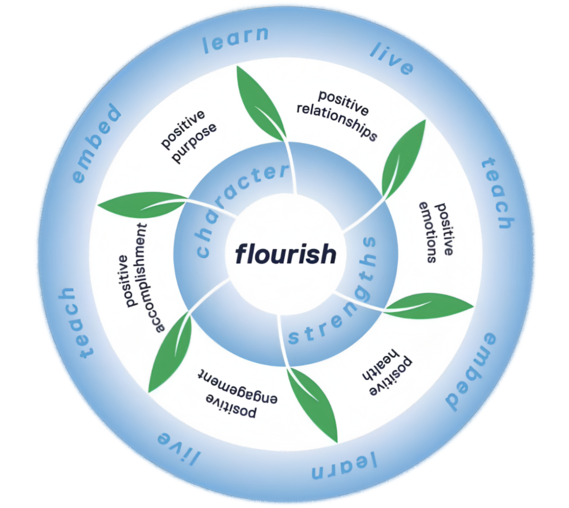
Positive Education framework used by Geelong Grammar School in Australia
(Hoare et al., 2017)
Project Scope
With generous support from the Chan Kee Hwa Scholarship, a three-year extension of the 'Po Leung Kuk Positive Education Movement in Primary Schools (2021-24)' was subsequently launched to build on these remarkable outcomes. Leveraging the successes of the earlier phases, the initiative is being progressively expanded to all Po Leung Kuk primary schools, to fully embed Positive Education across all Po Leung Kuk primary schools. To enhance its effectiveness, three pioneering schools with extensive experience in Positive Education have been invited to serve as affiliated partners, providing support to peer schools through professional exchange and sharing of best practices to facilitate the implementation and integration of Positive Education.
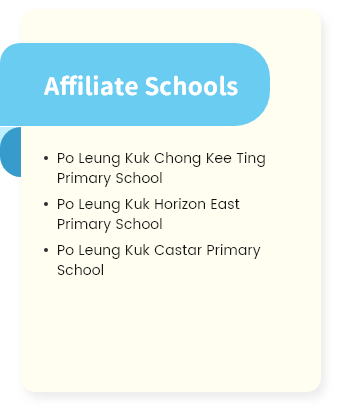
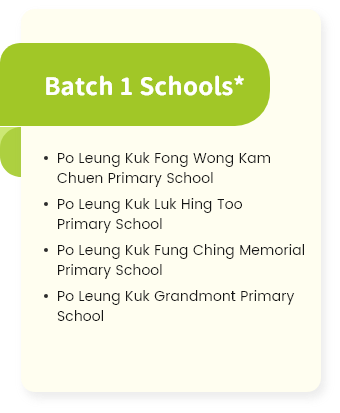
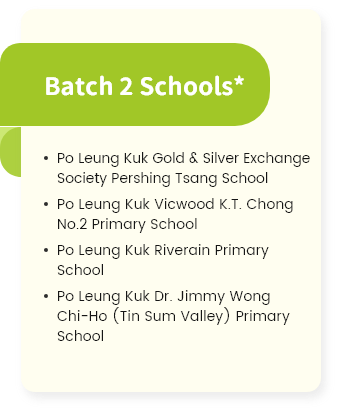
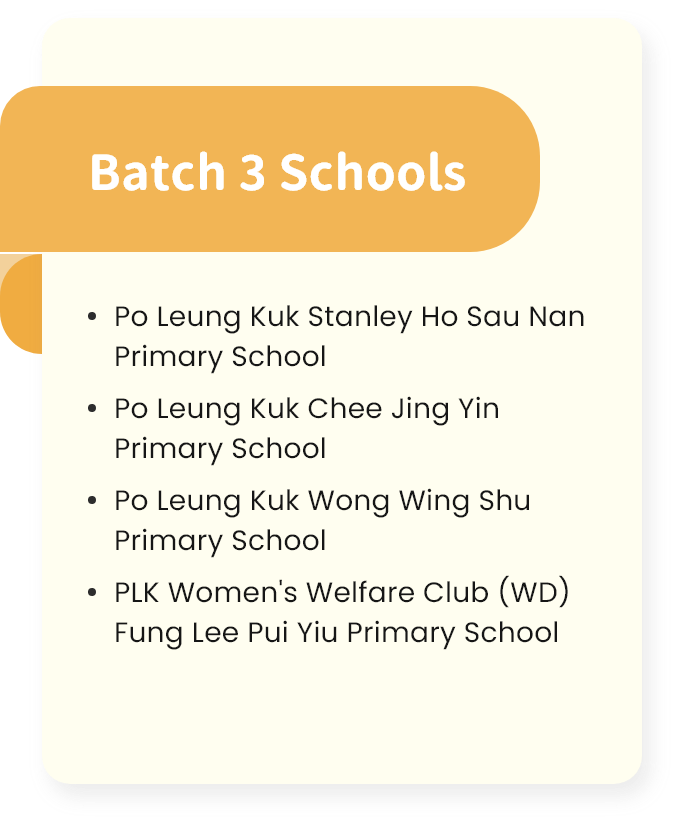
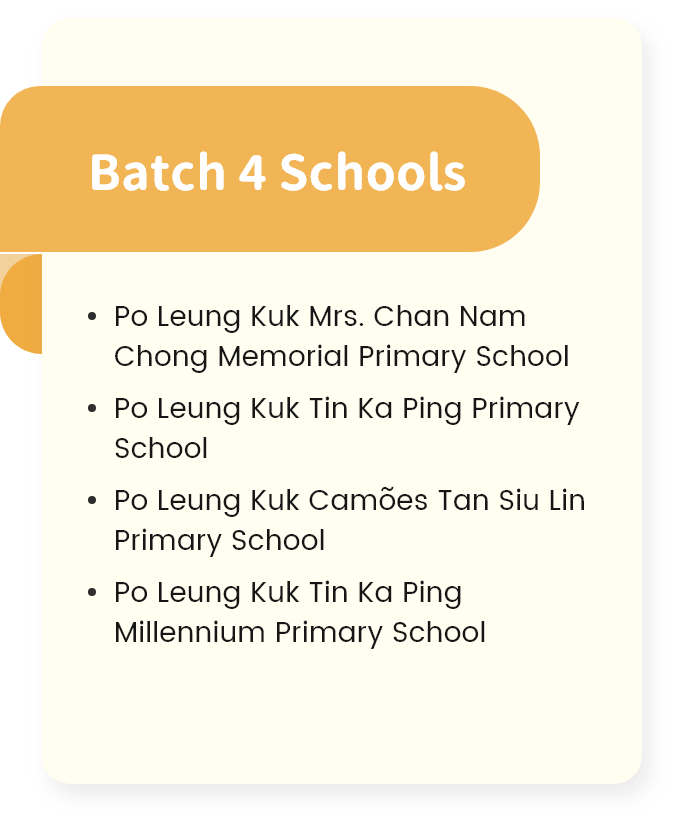
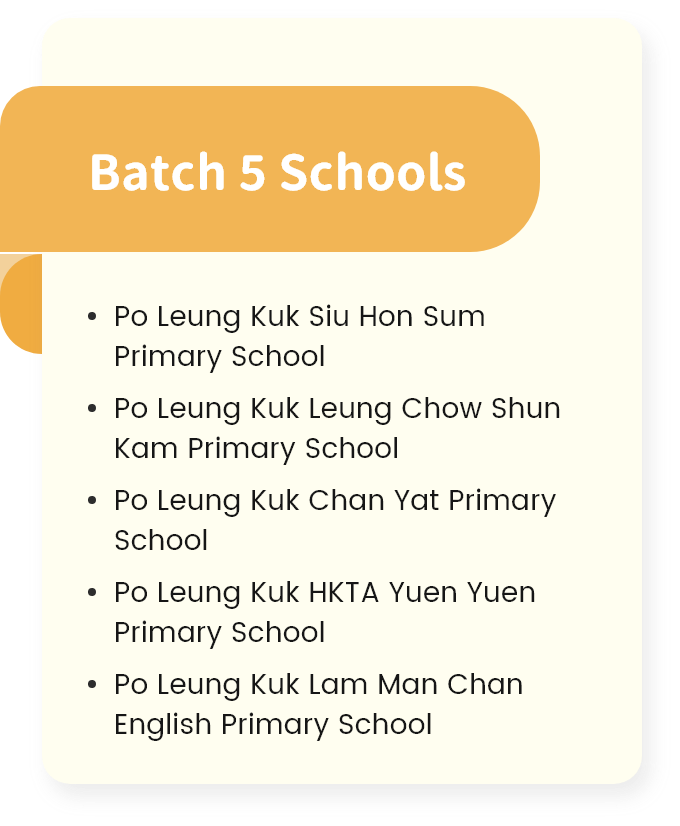
*Schools that participated in Po Leung Kuk Positive Education Movement in Primary Schools (2021-24)
We express our sincere thanks to Bei Shan Tang Foundation and Dr. Melody Jia-Qi XU (Department of Psychology, HKU) for their support and guidance to the project, as well as for providing invaluable resources and advice.
Project Features
The project aims to enhance the well-being of various stakeholders within the school community (including students, parents, and school personnel). Strategies include:
Developing professional training to enhance knowledge and application
- Provide Positive Education training for school personnel and parents, led by a team of Educational Psychologists
- Explore ways to transform Positive Education theories into applications for teaching and daily life, cultivating a positive school culture
Supporting schools in adopting a whole-school approach to Positive Education
- Implement a school-based Positive Education curriculum
- Embed Positive Education in school policies
Creating diverse materials to consolidate learning
- Develop Picture books novels, and animated videos on key Positive Education topics
- Establish an online resource platform to facilitate learning, application, and embed Positive Education into practices and daily life for all stakeholders
Building networks for the exchange of experience and knowledge transfer
- Invite schools with experience in Positive Education to share their best practices
- Create a cross-school support network and resource bank to promote the sustainable development of Positive Education
References:
Hoare, E., Bott, D., & Robinson, J. (2017). Learn it, Live it, Teach it, Embed it: Implementing a whole school approach to foster positive mental health and wellbeing through Positive Education. International Journal of Wellbeing, 7(3). https://doi.org/10.5502/ijw.v7i3.645
Norrish, J. M., Williams, P., O’Connor, M., & Robinson, J. (2013). An applied framework for positive education. International Journal of Wellbeing, 3(2), 147–161 . https://doi.org/10.5502/ijw.v3i2.2
Seligman, M. E. P., Ernst, R. M., Gillham, J., Reivich, K., & Linkins, M. (2009). Positive education: Positive psychology and classroom interventions. Oxford Review of Education, 35(3), 293–311. https://doi.org/10.1080/03054980902934563
Seligman, M. E. P. (2011). Flourish: A visionary new understanding of happiness and well-being. Free Press.
Our Team

Dr. Elaine Chan
Supervisor

Ms. Kwok Tung Ting, Natasha
Educational Psychologist

Ms. Wan Cho Yiu
Educational Psychologist

Ms. Chan Ka Yan, Caitlyn
Educational Psychologist

Ms. Chiu Ka Yu, Jade
Educational Psychologist

Ms. Chan Yan Lam, Laura
Educational Psychologist

Ms. Lam Ka Wai, Jackie
Project Officer

Ms. Suen Sau Mui, Susan
Project Officer

Mr. Yim Wai Chaak, Smile
Project Officer
(2024-2025)

Ms. Shek Hau Hop, Lily
Project Officer
(2024-2025)